Capabilities
Ask for the outcome. It handles the steps.
It reads across the apps you've connected, finds the paragraph in your own documents, looks up what it doesn't know, and comes back with the work done.
It already has the context
It sees the whole picture.
Connect the apps you work in and it looks at what it needs — your mail, your calendar, your tasks, your documents — so the answer comes from your actual week rather than a guess.
Answers from your own documents
Early accessSee exactly where that came from.
Point it at the places your team keeps its documents, and answers start coming from what your own people have written — with the sources attached. Open one to read the exact wording behind the answer, the page it sits on, and the document itself at that page.
- Only the places you choose are ever read, and they stay up to date
- Each document named once, however often it was quoted
- Open the real file at that page — your documents never leave where they live
Early access means it works and we use it ourselves every day. It's still moving, so bits of it will change. When it lets you down, tell us — that's the deal.
When it doesn't know
It goes and looks.
Some questions are newer than anything it was taught. When yours is, it searches the public web, reads the pages it finds, and answers from those — naming each one underneath, so you can go and check rather than take its word.
- It searches only when the question actually needs it
- You see what it searched for, while it searches
- The pages the answer rests on are named underneath
- Turn it off in one chat, for one agent, or for everything you start from now on
It actually does it
Ask, and it's done.
It doesn't stop at telling you what to do. It writes the reply, moves the meeting, sets the nudge for later, tidies up who can see what — and hands you the finished thing.
It hands you the file
Early accessAsk for the deck. Get the deck.
Say what the slides are about and who they are for. It writes them — an opening, a run of slides that builds the argument, a close — and hands back a PowerPoint file you can open, edit and send on.
- Every slide laid out to suit what is on it
- Charts that open to a grid you can change
- Photographs that are free to use, credited at the end
- It appears under the answer, and stays in a list of its own
Three looks
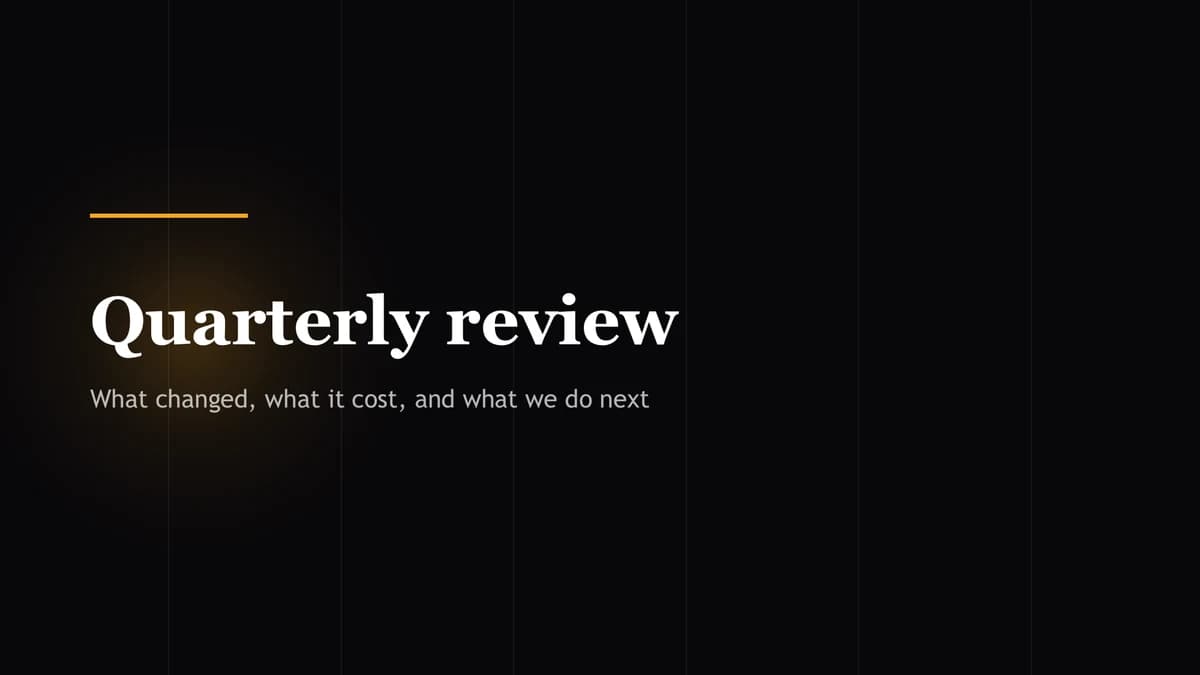
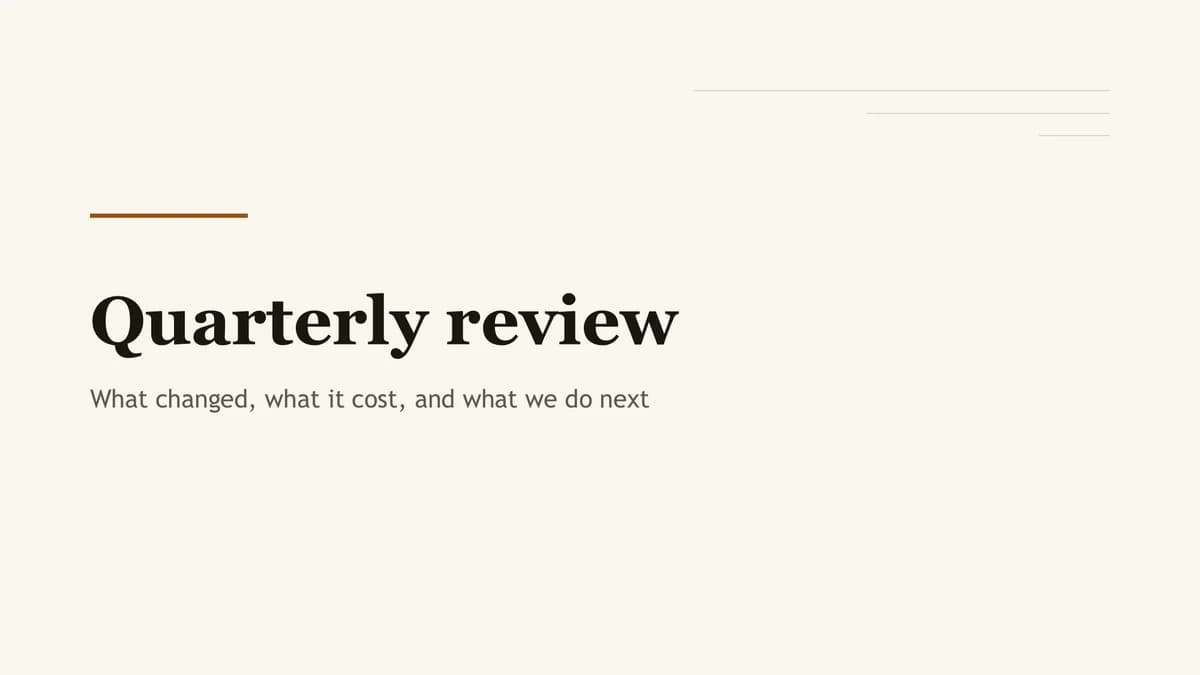
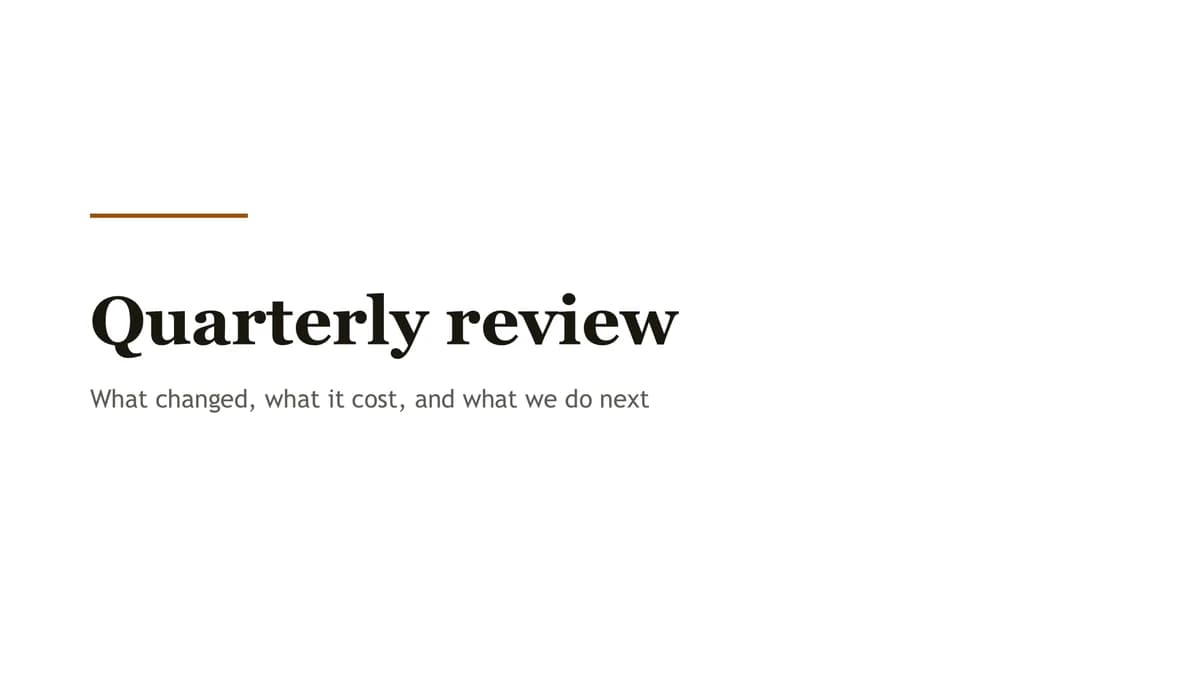
The same slides, dressed three ways.
Ask for one by name and it is built that way. Each is a design of its own rather than a change of colour, so whichever you pick, the deck looks like it came from the same place as everything else you have seen from us.
Bigger jobs
One request, many hands.
Hand it something that would take you an afternoon and it works out the steps, sets several helpers going at the same time, and brings it all back as one answer.
Your call
Nothing changes without your yes.
Looking things up happens straight away, so it stays useful. But the moment it wants to change something, it stops and shows you exactly what it is about to do — and waits. Once you trust it with a job, you can let it get on with that one by itself.
- You see exactly what it will do before it happens
- Say yes, or say no, one thing at a time
- Let it get on with a job by itself once you're ready
- Some connections can only look, and can never change a thing
It starts without being asked
Early accessSome work shouldn't wait for you.
Work starts three ways: when you ask, when the clock says so, or the moment something changes in an app you've connected — mail from a particular person, a meeting moved, something said in a chat, a build broken, a sign-in that looks wrong. Choose the moment, narrow it to what actually matters, and pick who answers it.
- Moments to wait for across Microsoft 365, GitHub and Microsoft Entra ID
- Only a real change starts anything, narrowed to what matters to you
- A meeting that repeats is understood as one, so a nudge can repeat with it
- It stays quiet when there is nothing worth telling you
Yours to set up
Tell it what to do, and when.
Helpers you build by talking
Say what you want one to do and when it should do it, and it's made. Change it later from its own page, or set it going yourself whenever you like.
Helpers that hand work to each other
Line them up so each one picks up where the last left off. The whole line runs when you ask, at a time you choose, or the moment something happens.
Nudges in your own words
Say what to send you and how often. It arrives by email, or in a chat you've connected, and you can change or pause it whenever you like.
In your apps
A few things people ask for.
Connect an app and just ask — out loud or by typing.
If you look after code, cloud or accounts, there is a part of the integrations page written for you. For technical teams
How it works.
Only if you let it. Looking things up happens straight away; anything it would change stops and waits for your yes, and you see exactly what it plans to do first. Once you trust it with a job you can let it get on with that one by itself. Some connections, like Microsoft Entra ID, can only look and can never change a thing.
Mail, calendar and tasks in Microsoft 365 and Google Workspace; your code and the work around it in GitHub; what is running in Microsoft Azure and what it costs; who signed in, in Microsoft Entra ID; how your site is found and used in Google Search Console and Google Analytics; your locations in Google Business Profile; and posting in LinkedIn. Open the integrations page to see each one.
Answers drawn from your own documents list the documents they used — each one once, however many times it was quoted. Open one and you'll see the exact wording behind the answer and the page it sits on, and you can open the document itself at that page. Your files stay where they already live, and Dewiride AI never keeps a copy.
It searches the public web, reads the pages it finds, and answers from those — naming each page underneath so you can check for yourself. You can turn that off in one chat, for one agent, or for everything you start from now on.
Yes, once you have set that up. Pick a moment in a connected app to wait for — mail from a particular person, a meeting moved, a build broken — narrow it down to what matters, and choose who answers it. It stays quiet when there is nothing worth telling you.
Yes. Say what the slides are about and who they are for, and it writes them and hands you a PowerPoint file to open, edit and send on. Each slide is laid out to suit what is on it, charts open to a grid you can change, and any photographs it uses are free to use and credited on a page at the end. Ask for one of the three looks by name if you want a particular one. It appears under the answer and stays in your files until you delete it.
See what it can do for you.
Join the waitlist for early access. We send out new invitations every week.
Invite-only early access. No spam.